
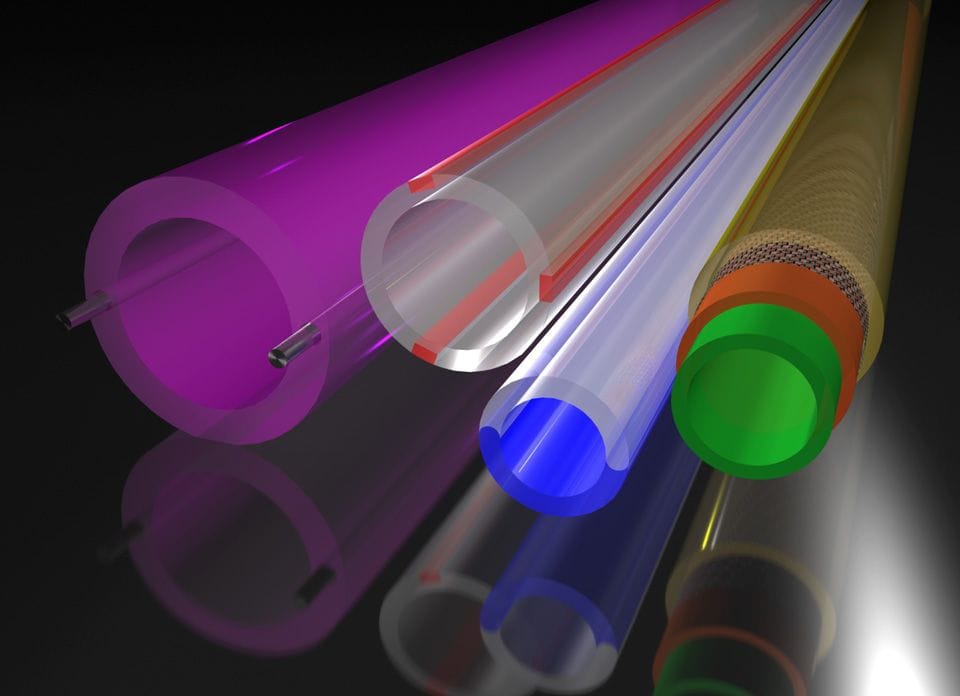
What if a single plastic profile could behave like two different materials at once?
Imagine a component that carries structural loads, resists ultraviolet exposure, absorbs impact, and seals against moisture all within one continuous shape. No secondary bonding or added assembly, and without the need to compromise between strength and flexibility.
For decades, manufacturers had to choose which performance characteristic mattered most. A material that delivered rigidity might lack weather resistance, or a polymer that handled chemicals well might fall short under impact. Product designers were often forced into tradeoffs.
Co-extrusion changed that conversation.
By allowing two different polymers to flow together during manufacturing, co-extrusion makes it possible to engineer performance directly into the cross-section of a profile. Layers can be positioned with purpose, and each material serves a defined role. You end up with not just a plastic shape but also a carefully constructed system built at the molecular level.
What Is Co-Extrusion for Plastic?
Co-extrusion is a plastic manufacturing process in which two polymers are extruded at the same time and fused together into a single, continuous profile.
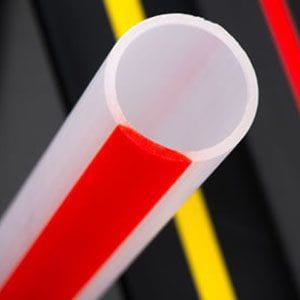
Instead of producing a one-material shape, co-extrusion allows layers to be engineered within the same cross-section. These layers remain distinct in function yet permanently bonded at the molecular level. For example, a typical co-extruded profile may include a structural core that provides rigidity and dimensional stability as well as a soft-touch outer surface for sealing or impact absorption
Unlike lamination or adhesive bonding, co-extrusion joins materials while they are molten. The polymers merge inside a specially engineered die, creating a strong, unified profile without glue lines or secondary bonding steps.
The result is a single component that performs like two different materials working together.
Plastic Extrusion vs. Co-Extrusion vs. Tri-Extrusion
At a glance, all three methods involve forcing molten plastic through a shaped die. But although these processes share a common foundation, they differ significantly in how many materials are involved and how intentionally performance characteristics are engineered into the cross-section. Understanding how they compare helps product designers and engineers determine the right manufacturing strategy based on functional demands, budget, and long-term durability requirements.
Traditional Plastic Extrusion
In the standard plastic extrusion process, one material is melted, pushed through a die, shaped, cooled, and cut to length. The entire profile is made from a single polymer, which means every performance attribute must come from that one material.
This method works well for straightforward applications where strength, flexibility, chemical resistance, and environmental durability can all be satisfied by a single resin. It is efficient, repeatable, and cost-effective for high-volume production.
However, single-material extrusion has practical limits. If a product needs both rigidity and flexibility, high structural strength and a soft sealing edge, or long-term UV resistance with impact absorption, tradeoffs become unavoidable. Designers may be forced to select a material that performs adequately in several areas rather than exceptionally in one.
Co-Extrusion
Co-extrusion builds on the same extrusion principles but introduces two extruders feeding a single die. Each extruder processes a different polymer, allowing materials with distinct properties to flow together before exiting as one bonded profile. This process enables strategic material placement within the cross-section. For example, a high-strength core can provide structural integrity, while a weather-resistant cap layer shields the exterior. Alternatively, a flexible elastomer can be integrated into a rigid frame to create a built-in gasket or seal.
Because materials are joined in their molten state, the bond forms during manufacturing rather than through secondary assembly. It produces a unified component that behaves as a cohesive system rather than a collection of separate parts.
For applications that demand performance without added assembly complexity, co-extrusion offers a powerful balance of engineering control and manufacturing efficiency.
Tri-Extrusion
Tri-extrusion takes the concept further by introducing a third material stream into the die.
This approach allows engineers to fine-tune performance in highly specialized applications where two layers are not sufficient. For example, a refrigeration component might require 1) a rigid internal core for dimensional stability, 2) a moisture-resistant intermediate barrier, and 3) a flexible outer seal for thermal performance. When properly engineered, tri-extrusion allows manufacturers to solve such complex design challenges within a single continuous profile, reducing part count while enhancing functionality.
6 Advantages of the Co-Extrusion Process
Co-extrusion is a strategic engineering approach that allows manufacturers to design performance into the structure of a component from the inside out. By combining materials during a single manufacturing cycle, companies gain control over mechanical strength, environmental resistance, appearance, weight, and cost within one unified profile.
Here are some of the benefits of using a co-extrusion process for plastics manufacturing.
1. Enhanced Performance
Rather than relying on one polymer to handle every requirement, co-extrusion assigns specific responsibilities to each layer. A rigid core can carry loads and maintain dimensional stability, while an outer cap layer can protect against ultraviolet exposure or chemicals.
This separation of function allows each material to operate where it performs best. Instead of compromise, designers achieve targeted performance across multiple criteria within a single part.
2. Cost Optimization
High-performance resins often come at a premium. With co-extrusion, those materials can be positioned only where they are needed most.
For example, a weather-resistant or UV-stable material may be used strictly on the exterior surface, while a more economical structural polymer forms the internal core. This layered strategy reduces overall material cost without sacrificing functionality. Over long production runs, such material efficiency can significantly impact total project economics.
3. Improved Durability
Environmental exposure is one of the most common causes of premature product failure. Sunlight, moisture, chemicals, temperature fluctuations, and abrasion all take a toll over time.
Co-extruded cap layers act as protective shields, isolating structural materials from direct exposure. Especially in industrial, construction, water treatment, and telecom environments, this added protection translates into longer service life and fewer maintenance issues.
The durability advantage becomes even more valuable in outdoor or high-stress applications where replacement costs are substantial.
4. Design Flexibility
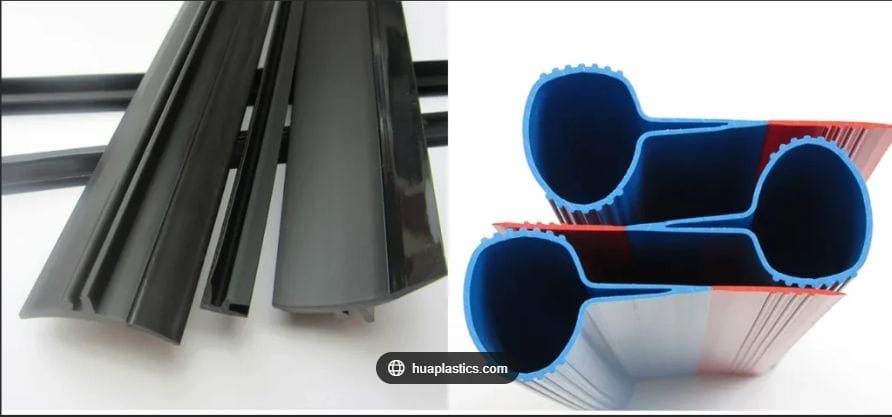
Thanks to co-extrusion, complex cross-sections that would otherwise require multiple assembled parts can be produced in one continuous extrusion. Integrated seals, snap-fit features, rigid backbones with flexible lips, or multi-surface finishes can all be engineered directly into the profile geometry, and designers gain freedom to create parts that are both functional and streamlined. This flexibility supports innovation in industries ranging from lighting and refrigeration to retail displays and industrial equipment.
5. Reduced Assembly Steps
Because materials are fused in their molten state, co-extrusion eliminates the need for secondary bonding, adhesive application, or mechanical fastening between layers.
Fewer assembly steps reduce labor requirements and minimize potential failure points. The bond between layers forms during manufacturing, resulting in a cohesive structure rather than multiple joined components. Streamlined production also improves consistency across large production volumes.
6. Weight Reduction
Weight plays a critical role in shipping costs, installation efficiency, and overall system performance. In applications such as telecom infrastructure, construction components, and consumer products, even modest weight savings can have measurable operational benefits.
By combining lightweight core materials with high-performance outer layers, manufacturers can reduce mass while maintaining structural integrity. The ability to fine-tune density within the cross-section gives engineers another lever for optimizing both performance and cost.
How It Works: 6 Steps in the Co-Extrusion Process
A co-extruded profile may appear simple from the outside, but the manufacturing process behind it is highly coordinated and technically precise. Two different materials must flow at controlled temperatures, pressures, and speeds, all while maintaining exact positioning within the cross-section.
Step #1: Material Selection & Engineering
Every successful project begins long before material enters the extruder. Engineers start by analyzing the real-world demands of the application: Will the profile carry structural loads? Be exposed to sunlight year-round? Contact chemicals or moisture? Experience vibration or repeated impact?
Once performance criteria are defined, compatible polymers are selected. Mechanical properties such as tensile strength, impact resistance, and flexibility are evaluated alongside thermal characteristics like melt temperature and expansion behavior.
Adhesion compatibility is equally important. Some polymers bond naturally in a molten state, while others require specific pairing strategies or tie layers to promote adhesion. Proper material engineering at this stage directly influences long-term durability and layer integrity.
Step #2: Independent Melting & Plasticizing
Each selected material is fed into its own extruder. Inside the barrel, a rotating screw conveys pellets forward while applying heat and shear. The material transitions from solid to a controlled, pressurized melt.
Different polymers respond differently to heat and shear forces. One may require higher barrel temperatures, while another demands tighter control to prevent degradation. Screw design, residence time, and back pressure all contribute to achieving the correct melt consistency.
At this point, each material stream is fully molten but still separate, traveling through its own controlled pathway toward the die.
Step #3: Layer Convergence in the Co-Extrusion Die
The die is the heart of the co-extrusion system. It is where engineering design translates directly into product geometry.
Inside the die, precisely machined flow channels guide each molten stream into its intended position. Core materials typically form the internal structure, while cap or functional layers are directed to the outer surfaces or designated sections of the profile.
Flow balancing is critical. If one material flows faster than another, layer thickness can shift. If pressure distribution is uneven, internal stress may develop. Advanced die design accounts for viscosity differences, thermal behavior, and expansion rates to maintain uniformity across the entire cross-section.
When the combined material exits the die, the layers are already bonded, forming a unified profile.
Step #4: Shaping & Calibration
As the profile leaves the die, it remains soft and dimensionally unstable. Calibration tooling immediately guides the shape into its final geometry.
Calibration systems may include vacuum chambers, sizing plates, or precision fixtures that hold the profile in place while cooling begins. Maintaining tight tolerances is especially important for construction components, telecom housings, lighting profiles, and industrial framing elements that must integrate seamlessly with other parts.
Layer alignment is also monitored during this phase. Any distortion can impact performance, particularly in profiles with integrated seals or thin cap layers.
Step #5: Cooling & Solidification
Controlled cooling transforms the molten structure into a stable, finished component. Depending on the material combination and profile complexity, this part of the process may involve air cooling, water baths, or vacuum-assisted cooling systems.
Cooling rates influence internal stress, dimensional stability, and surface quality. Cooling too quickly can create tension within the profile, but cooling too slowly may affect throughput and geometry control. Well-managed temperature transitions allow the bonded layers to solidify as a cohesive structure while preserving cross-sectional accuracy.
Step #6: Cutting & Quality Control
After cooling, the continuous profile is cut to specified lengths using precision cutting systems.
However, production doesn’t end at cutting. Quality verification takes place throughout the run: Dimensional checks confirm tolerance compliance, surface inspections evaluate appearance and finish, and bond integrity is assessed to confirm that layers remain firmly fused.
For high-performance applications in industrial, refrigeration, water treatment, or telecom environments, consistent quality control protects long-term reliability.
Commonly Used Co-Extrusion Materials
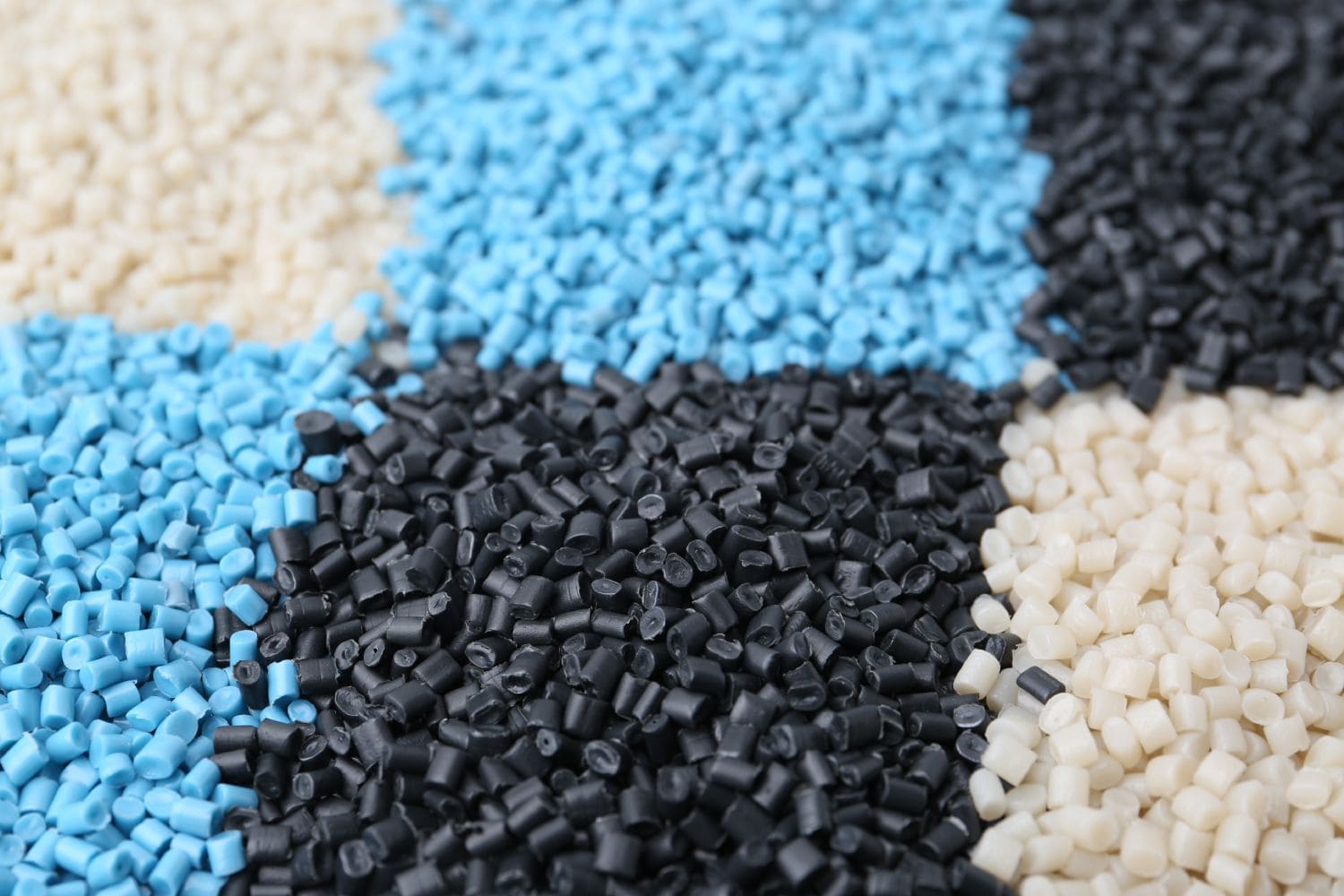
Material selection sits at the core of every successful co-extrusion project. The real power of the process lies not just in layering plastics but also in pairing polymers whose properties complement one another.
Some materials bring structural rigidity. Others contribute flexibility, impact resistance, UV stability, clarity, chemical resistance, or thermal performance. When properly engineered, these combinations allow each layer to perform a specific function within the overall profile.
Common materials used in co-extrusion include the following:
- Acrylic (PMMA)
- Acrylonitrile butadiene styrene (ABS)
- High-density polyethylene (HDPE)
- Low-density polyethylene (LDPE)
- Polyamides
- Polycarbonate (PC)
- Polypropylene (PP)
- Polyvinyl chloride (PVC)
- Thermoplastic elastomers (TPE)
Material compatibility remains one of the most critical technical considerations in co-extrusion. Melt temperature alignment, adhesion behavior, and long-term environmental exposure all influence whether two polymers can function reliably together.
Applications of Co-Extrusion for Plastic by Industry
The versatility of co-extrusion becomes most visible when examining how it performs in real-world applications. Across industries, manufacturers rely on two-layer profiles to solve challenges that single-material components simply cannot address. Whether the priority is structural integrity, environmental resistance, visual quality, or integrated sealing performance, co-extrusion allows these requirements to coexist within a single engineered shape.
Here are several industries where co-extrusion delivers measurable advantages.
Industrial Equipment
In industrial environments, components are often exposed to impact, vibration, abrasion, and chemical contact. Co-extruded profiles allow engineers to combine a rigid structural backbone with wear-resistant or chemically stable outer layers, extending service life in demanding settings. Protective guards, machine framing elements, and custom housings benefit from layered construction that balances mechanical strength with surface durability, helping reduce downtime and maintenance costs.
Lighting Systems
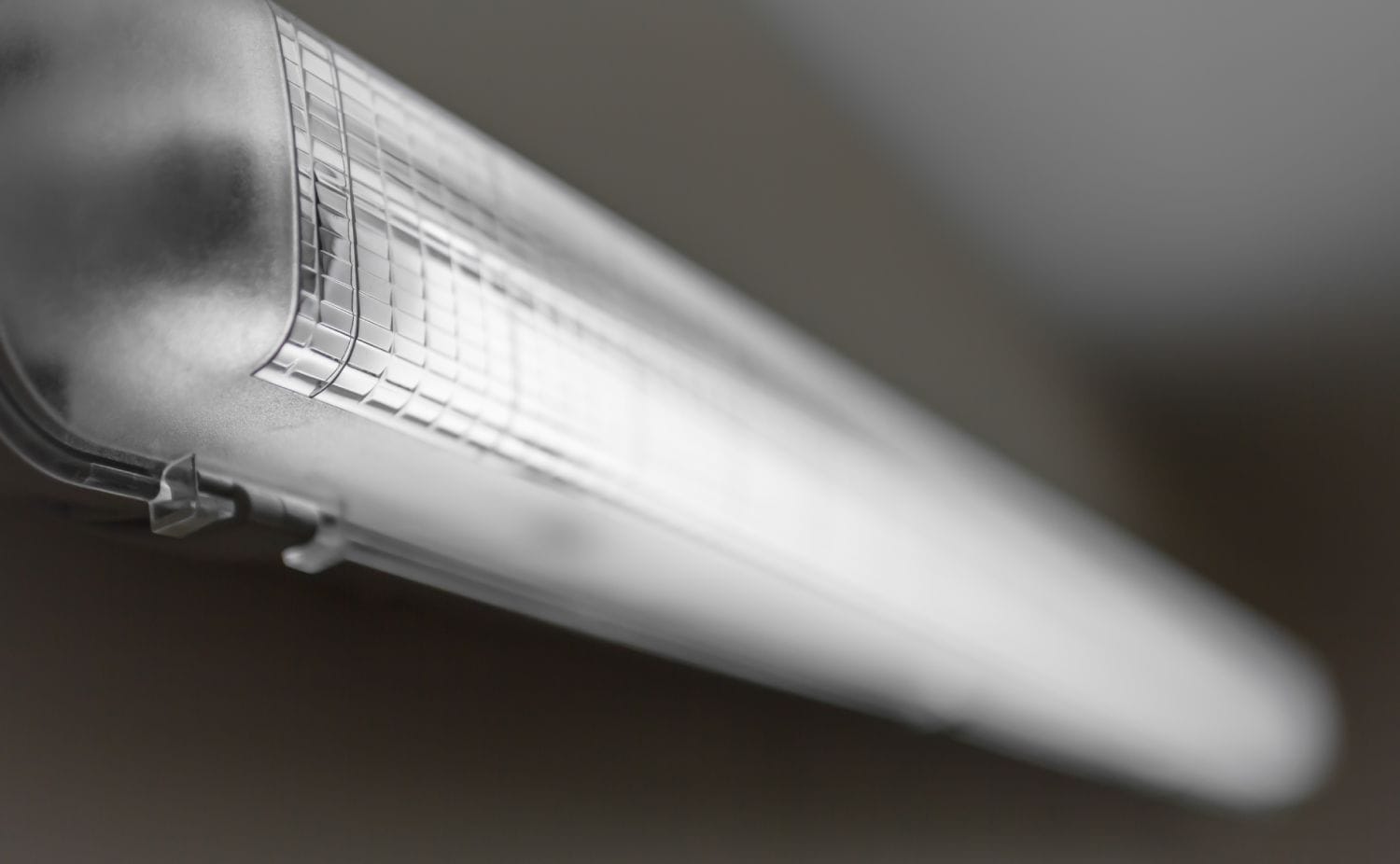
Lighting applications demand precision, clarity, and long-term stability. Co-extruded LED diffusers frequently combine a rigid base for mounting and structural alignment with a translucent or optically engineered cap layer that distributes light evenly. UV-stable materials can be incorporated to resist yellowing or degradation over time, particularly in architectural or outdoor installations. A layered approach supports both performance and visual consistency throughout the product’s lifecycle.
Construction & Building
Construction and building components must withstand weather exposure, temperature fluctuations, and physical stress while maintaining dimensional accuracy. Co-extruded window profiles, trim pieces, and framing elements often integrate UV-resistant cap layers over strong internal cores. This configuration protects against fading, cracking, and environmental wear without sacrificing load-bearing capability. The result is a building product that performs structurally while maintaining its appearance over years of exposure.
Refrigeration
Refrigeration systems require tight sealing performance alongside structural stability. Co-extrusion allows rigid support sections and flexible sealing lips to be produced within the same continuous profile. Such integrated design reduces assembly complexity while improving thermal performance and moisture control.
By combining materials optimized for cold environments with durable structural polymers, refrigeration components can deliver consistent performance in temperature-sensitive applications.
Point of Purchase (POP) Displays
Retail and POP displays must combine aesthetics with structural integrity. Co-extruded profiles provide clean, visually appealing outer surfaces supported by durable internal cores capable of handling load requirements. Designers can incorporate color, gloss, or specialty finishes into the exterior layer while maintaining cost efficiency through optimized core materials. The balance supports both branding goals and structural reliability in high-traffic retail settings.
Consumer Products
Consumer-facing products often require a refined appearance along with tactile comfort and durability. Co-extrusion makes it possible to integrate soft-touch surfaces over rigid substrates, creating components that feel comfortable while maintaining structural performance.
Protective edging, decorative trim, and impact-resistant housings benefit from this dual-function design, allowing manufacturers to enhance both user experience and product longevity.
Water Treatment Systems
Components used in water treatment environments must resist corrosion, chemical exposure, and long-term moisture contact. Co-extruded profiles can incorporate chemically resistant outer layers bonded to strong internal structural cores, supporting durability in harsh operating conditions. Multi-layer construction helps maintain dimensional stability and performance integrity in systems where failure could result in costly downtime or contamination risks.
Telecom Infrastructure
Telecom infrastructure frequently operates outdoors, exposed to sunlight, temperature shifts, and environmental stress. Co-extruded profiles allow UV-resistant outer layers to shield internal structural materials, preserving performance and appearance over time.
Cable management channels, protective housings, and mounting components benefit from this layered strategy, which enhances reliability while maintaining tight dimensional tolerances required for installation.
Signage
Signage systems, particularly those installed outdoors, must maintain structural strength while resisting fading and weather-related degradation. Co-extruded frames and trim profiles often combine robust internal supports with UV-stable exterior surfaces that protect color and finish. A co-extrusion approach supports long-term visual quality while maintaining the mechanical stability required to withstand wind, temperature changes, and continuous exposure to the elements.
Why Partner with Lakeland Plastics for Your Next Co-Extrusion Project?
At Lakeland Plastics, we approach co-extrusion as a collaborative engineering partnership. From early concept discussions to full-scale production, our focus is on building profiles that perform reliably in real-world environments. When you partner with us, you gain a team committed to helping you design smarter, manufacture efficiently, and deliver high-performance plastic profiles built for long-term success.
Engineering-First Approach
Every project begins with understanding how the profile will function in its final application. We work closely with our customers to evaluate load requirements, environmental exposure, tolerance expectations, and integration needs. Our team helps identify compatible material combinations and layer configurations that align with performance targets while remaining practical to manufacture. This engineering-first mindset reduces trial-and-error and accelerates the path from concept to production.
In-House Tooling & Die Expertise
The die is the heart of any co-extrusion system. Its design directly influences layer placement, thickness consistency, and bonding performance.
We design and manage tooling with precision, allowing us to control flow dynamics and maintain cross-sectional accuracy. By keeping tooling expertise closely aligned with production, we can fine-tune performance, adjust quickly when needed, and maintain tight dimensional tolerances across runs.
Advanced Process Control & Quality Discipline
Multi-layer extrusion demands strict temperature management, pressure balance, and line speed coordination. Our production environment emphasizes repeatability and consistency from start to finish. Throughout each run, we monitor dimensional accuracy, surface finish, and bond integrity.
This disciplined approach supports reliable performance in industrial and commercial environments where failure is not an option.
Custom Solutions for Complex Applications
We tailor each solution to the specific demands of the project. Whether you’re looking to integrate flexible seals into rigid profiles, develop UV-stable cap layers for outdoor exposure, or optimize material usage for cost efficiency, our experience across a wide range of industries allows us to anticipate challenges and recommend practical, performance-driven design strategies.
The Co-Extrusion Process: FAQs
What Is the Co-Extrusion Process?
The co-extrusion process is a plastic manufacturing method in which two different polymers are melted in separate extruders and then combined in a single die to form one continuous profile. Each material is strategically positioned within the cross-section to serve a specific function, such as structural support, UV protection, flexibility, or chemical resistance. The layers bond while in a molten state to create a unified component without the need for adhesives or secondary assembly.
How Does Co-Extrusion Differ From Traditional Plastic Extrusion?
Traditional extrusion uses a single material to create a profile, meaning all performance characteristics must come from one polymer. Co-extrusion, by contrast, allows two different materials to be integrated into the same shape. This multi-layer process makes it possible to combine different properties within a single part, such as rigidity and flexibility, or durability and aesthetic finish, without compromise.
What Is the Difference Between Co-Extrusion & Tri-Extrusion?
Co-extrusion typically refers to combining two materials, while tri-extrusion incorporates three distinct material streams into one profile. Tri-extrusion provides greater design flexibility for highly specialized applications, allowing engineers to fine-tune structural, barrier, and surface characteristics within the same component. However, it also requires more advanced tooling and process control.
What Are the Advantages of Co-Extrusion?
Co-extrusion offers several key advantages, including enhanced performance through material layering, improved durability in harsh environments, reduced assembly steps, and cost efficiency through strategic material placement. It allows manufacturers to use high-performance polymers only where needed, while relying on more economical materials for structural support. This balance supports long-term reliability and optimized production economics.
Can Different Colors or Finishes Be Incorporated Into Co-Extruded Profiles?
Yes. Co-extrusion allows color and surface finish to be integrated directly into a specific layer of the profile. For example, a decorative or brand-specific color can be applied as an outer cap layer while the core remains a different material. Textures, gloss levels, and even translucent or diffused finishes can be engineered into the design without secondary painting or coating processes.
Are Co-Extruded Layers Strongly Bonded?
When materials are properly selected and processed, the bond between layers forms during the molten phase inside the die. This process creates a durable, integrated structure rather than a mechanically joined assembly. Bond integrity depends on material compatibility, melt temperatures, pressure balance, and die design, which is why process control and engineering oversight are critical.
How Are Layer Thicknesses Controlled in Co-Extrusion?
Layer thickness is controlled through die design, flow channel engineering, and precise management of extrusion rates. Each extruder’s output can be adjusted to fine-tune how much material contributes to the final cross-section. Advanced die balancing helps maintain uniform distribution across the profile, supporting consistent performance and appearance throughout production runs.
Is Co-Extrusion Suitable for High-Volume Production?
Yes. Once tooling and process parameters are properly developed, co-extrusion is highly scalable. It supports continuous production with consistent quality, making it well suited for both medium and high-volume manufacturing programs.
What Should You Look for in a Plastic Co-Extrusion Partner?
An experienced co-extrusion partner should offer more than production capacity. Look for strong engineering capabilities, in-house tooling expertise, a clear understanding of material compatibility, and disciplined process control. The right partner collaborates early in the design phase, helps evaluate performance tradeoffs, and maintains tight quality standards throughout production. A combination of technical knowledge, responsiveness, and industry experience can significantly influence the long-term success of your project.
Contact Lakeland Plastics: The Leading Plastic Extrusion Company
Co-extrusion has transformed what plastic profiles can accomplish. By combining materials within a single component, manufacturers gain flexibility, performance, and efficiency that would be difficult to achieve otherwise.
If you are evaluating a new product design or looking to improve performance in an existing profile, the team at Lakeland Plastics can help you explore what co-extrusion makes possible. Contact us or request a quote today to discuss your next project and discover how our plastic extrusion expertise can move your vision forward.
