
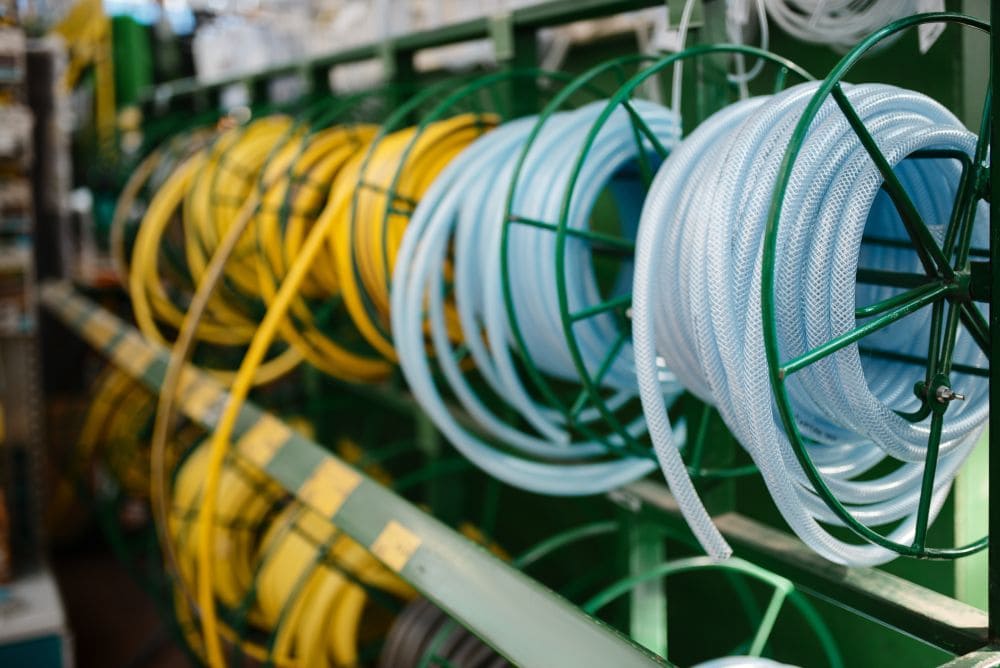
Plastic extrusion powers many of the products people use every day, from the tubing that carries fluids in hospitals to the protective coatings on electrical cables.
There are many different types of plastic extrusion, but overall, the process involves taking molten plastic and shaping it into continuous, perfectly engineered forms that meet exact design requirements. It combines technical expertise and material science to produce products that are strong, reliable, precise, and tailored to specific applications.
The right plastic extrusion method can make the difference between an ordinary product and an exceptional one.
Plastic Extrusion Methods by Product Type
Plastic extrusion can produce an incredible range of products, each designed for specific performance needs. The method chosen depends on the product’s geometry, material requirements, and intended use. Understanding these distinctions helps manufacturers choose the best process to deliver consistent, high-quality results.
Tubing Extrusion
Tubing extrusion is the preferred method for manufacturing hollow, cylindrical plastic products that must maintain exact internal diameters and wall thicknesses. During the process, plastic pellets are heated and forced through an annular die, creating a continuous hollow shape that’s cooled and precisely sized. Advanced extrusion lines often include vacuum calibration and laser measurement systems to maintain accuracy down to fractions of a millimeter.
This process is best suited for applications that require a combination of flexibility, strength, and durability. Industries like medical, automotive, and electrical rely on tubing extrusion for products such as IV lines, automotive fuel lines, and wire insulation. The method allows for complex materials such as multilayer tubing or fluoropolymers that enhance performance in demanding environments.
Profile Extrusion
Profile extrusion produces continuous custom shapes that have complex or asymmetrical cross-sections. The molten polymer is pushed through a die tailored to the desired profile shape, then cooled in a vacuum calibrator to maintain precise dimensions. The process accommodates intricate geometries and integrates additional materials or layers when required.
The profile extrusion method is best suited for creating architectural and industrial products such as window and door frames, gaskets, weatherstripping, and structural trims. Manufacturers rely on profile extrusion when uniformity, dimensional stability, and repeatability are critical. Its flexibility makes it the go-to choice for custom-designed parts that need to perform consistently over long production runs.
Blown Film Extrusion
Blown film extrusion creates thin, seamless films used in flexible packaging, agricultural coverings, and industrial wraps. The process begins with extruding molten polymer through a circular die to form a continuous tube. Compressed air inflates the tube like a balloon, stretching it biaxially—both vertically and horizontally—before it cools and flattens.
This method is ideal when strength, flexibility, and barrier performance must coexist. It’s the preferred technique for manufacturing food packaging films, grocery bags, shrink wraps, and stretch films. Manufacturers can adjust air pressure, die size, and cooling speed to refine film thickness and durability. It’s also adaptable to multilayer films through co-extrusion to offer advanced barrier or sealant properties for specialized industries.
Sheet Film Extrusion
Sheet film extrusion is used to create broad, flat sheets with controlled thickness and uniform texture. The process pushes molten polymer through a flat die, and the sheet is then cooled and smoothed between precision rollers. Roll temperature and gap settings manage surface finish and thickness consistency.
A sheet film technique is best used for applications requiring strength, transparency, or rigidity. Automotive and construction industries use sheet extrusion for panels and protective barriers, while packaging manufacturers use it for blister packs and thermoformed trays. It’s also ideal when materials like polyethylene terephthalate (PET) or polycarbonate are needed for optical clarity, toughness, and heat resistance.
Plastic Extrusion Methods by Equipment Type
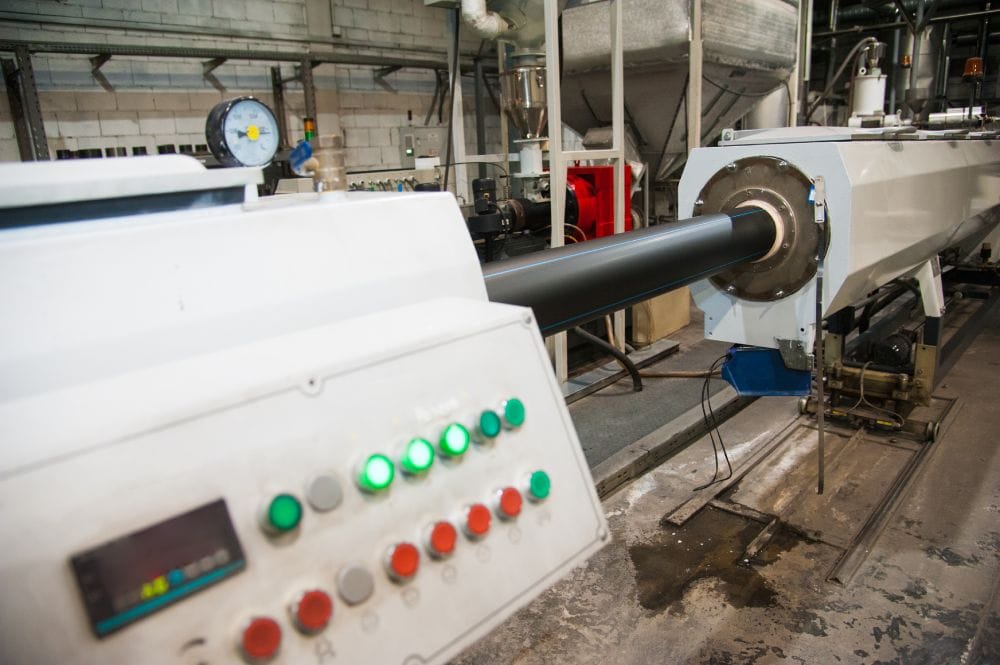
The type of plastic extrusion equipment determines how efficiently materials are melted, mixed, and formed. Choosing the right machine impacts output quality, consistency, and production speed.
Single-Screw Extruders
Single-screw extruders are the most common and versatile extrusion machines. A single rotating screw in a heated barrel melts, mixes, and conveys the polymer toward the die. The design is simple, energy-efficient, and easy to maintain, making it a preferred option for producing uniform products from standard materials.
These machines are best used for large-scale manufacturing where consistent material properties are required, such as pipes, rods, films, and sheets. Because of their straightforward operation, single-screw extruders are perfect for high-throughput applications and materials with stable viscosity. They are not as effective for complex compounding or mixing tasks but excel in producing uniform, continuous outputs.
Twin-Screw Extruders
Twin-screw extruders use two intermeshing screws rotating in the same or opposite directions. This design enhances mixing, blending, and material homogenization. Twin-screw extrusion provides tighter process control and allows for the incorporation of additives, fillers, or reinforcements during processing.
These systems are best used for specialty products that require advanced material formulations such as fiber-reinforced plastics, high-performance composites, and multilayer films. They are also preferred for color blending and chemical compounding, where precision and consistency are essential. Twin-screw extruders offer superior flexibility for industries that innovate with new materials or require stringent quality control.
Ram Extruders
Ram extrusion is used for materials that are too viscous or difficult to process with traditional screw extruders. In this method, preheated polymer billets are placed in a chamber and forced through a die by a hydraulic ram. Because the process doesn’t rely on mechanical shear, it can handle polymers like polytetrafluoroethylene (PTFE), ultra-high-molecular-weight polyethylene (UHMWPE), and other non-melting materials.
Ram extruders are best for producing short-length, high-density products where strength and precision are critical. Industries like aerospace, defense, and chemical processing rely on ram extrusion for components that must withstand extreme conditions. It’s also used for applications where dimensional accuracy and material integrity matter more than production speed.
Specialized & Advanced Plastic Extrusion Methods
As demand grows for more complex, high-performance products, specialized extrusion techniques have evolved. These advanced methods provide additional functionality, precision, and customization.
Co-Extrusion
Co-extrusion combines multiple polymers into a single, multilayer product. Each layer serves a distinct purpose, such as providing flexibility, color, chemical resistance, or structural strength. The materials are processed in separate extruders and merged in a specialized die to form a unified structure.
This method is best suited for products requiring multiple performance attributes in one piece, like medical tubing with an inner lubricant layer, packaging films with oxygen barriers, or decorative profiles combining strength and aesthetic appeal. Co-extrusion boosts product efficiency, reduces assembly steps, and gives manufacturers greater design freedom.
Tri-Extrusion
Tri-extrusion takes multilayer processing a step further by combining three different polymers into one continuous product. Each material is fed through its own extruder and carefully layered within a shared die to achieve precise control over thickness, adhesion, and performance.
This method allows manufacturers to engineer products that integrate multiple functional layers, such as structural strength, chemical resistance, and surface finish, within a single extrusion run. It’s the preferred method for complex applications that demand balanced performance from multiple materials, like medical tubing that combines flexibility, rigidity, and biocompatibility, or building profiles requiring strength, UV protection, and color stability. Tri-extrusion enhances product functionality, reduces post-processing, and expands design possibilities for industries that require high-quality, durable, and visually consistent components.
Over-Jacketing
Over-jacketing, or cable coating, is the process of extruding a protective plastic layer over an existing substrate like wire, cable, or tubing. The substrate passes through a die, where molten plastic encapsulates it before cooling, to create a durable and uniform jacket that bonds seamlessly to the underlying material.
This process is best used when a product must resist abrasion, moisture, or chemical exposure. It’s essential in the electrical, telecommunications, and industrial sectors for producing cables, hoses, and sensor housings. Over-jacketing provides insulation, protection, and flexibility in environments where performance and longevity are critical.
Foam Extrusion
Foam extrusion introduces a gas or chemical blowing agent into molten polymer to create a lightweight, cellular structure. As the mixture exits the die, the gas expands, forming small, closed cells within the plastic. This process produces a foamed product that maintains structural strength while significantly reducing weight and material usage.
The foam method is best suited for packaging, insulation, and cushioning applications where shock absorption, thermal efficiency, or buoyancy are important. It is frequently used to make polystyrene foam sheets, insulation boards, and foam pipe insulation. Manufacturers benefit from reduced costs, sustainability gains, and high energy efficiency without sacrificing strength.
Hydrostatic Extrusion
Hydrostatic extrusion uses a pressurized liquid medium to apply uniform pressure to the polymer during extrusion. This process minimizes friction and produces exceptionally smooth, defect-free surfaces. The even pressure distribution improves dimensional accuracy and lowers internal stresses in the finished product.
This technique is ideal for creating high-strength, precision-engineered parts used in aerospace, defense, and high-end manufacturing. Hydrostatic extrusion is often chosen for polymers or composites that demand superior uniformity, excellent surface finish, and consistent mechanical properties. Its precision makes it one of the most advanced extrusion methods available for high-performance industries.
How to Choose the Right Plastic Extrusion Method
Selecting the right extrusion method is both a technical and strategic decision. The choice depends on your product’s geometry, material, performance, and environmental demands. Considering how each factor influences the final product leads to the best results and cost efficiency.
Define Product Geometry & Design
Your product’s shape and structural needs are the foundation for choosing a plastic extrusion method. Tubing extrusion is ideal for hollow structures that require precision and smooth internal surfaces, while sheet extrusion works best for flat or broad surfaces needing rigidity. Complex shapes that require tight dimensional tolerances benefit from profile extrusion, which offers flexibility in design and scalability.
Beyond geometry, design also dictates how materials flow through the die. Smooth curves, uniform thickness, and well-balanced cross-sections promote stability and quality during production. Early collaboration between design and manufacturing teams minimizes costly redesigns and improves manufacturability.
Assess Material Properties
Different polymers behave uniquely under heat and pressure. Taking their properties into account helps make sure the selected extrusion process delivers consistency and long-term durability for the intended application.
Thermoplastics with low viscosity can be processed with single-screw extruders, while tougher or heat-sensitive materials may require twin-screw systems for uniform mixing. Materials that resist melting or flow like PTFE demand ram extrusion. It’s also important to consider additives or reinforcements. Fillers, colorants, or UV stabilizers can affect how a material extrudes and performs.
Evaluate Production Scale
Production volume plays a key role in determining efficiency and cost. For large-scale, continuous runs, single-screw extruders are cost-effective and stable. However, when working with multiple materials or additives, twin-screw systems provide better control and consistency.
Smaller batches or specialty projects may justify the use of ram extrusion or co-extrusion for their precision and flexibility. The right choice depends on balancing throughput with quality to achieve the highest possible yield without sacrificing performance.
Consider Environmental & End-Use Conditions
The operating environment can make or break a product’s performance. Products exposed to sunlight, heat, or chemicals need materials and extrusion methods that can withstand those stressors. For example, co-extrusion allows for UV-resistant outer layers, while foam extrusion provides insulation benefits.
When temperature fluctuations, pressure, or mechanical stress are concerns, choosing the proper method helps maintain product stability. Accounting for these factors during planning prevents failures in the field and extends product lifespan.
Partner with an Experienced Manufacturer
Choosing the right extrusion method is easier when guided by an experienced manufacturing partner. A high-quality manufacturer can offer extensive technical expertise, in-house tooling, and the ability to tailor processes to specific applications. Working with experts guarantees every detail, from design to delivery, aligns with your goals and performance standards.
At Lakeland Plastics, we have decades of experience helping clients optimize material performance, improve production efficiency, and achieve high-quality, cost-effective results. We’re ready to hear about your product, recommend a plastic extrusion method, and bring your project to life.
FAQs About Common Types of Plastic Extrusion Methods
Plastic extrusion is a versatile process, but it can be complex for those new to manufacturing. Here are some of the most common questions businesses ask when exploring different plastic extrusion methods, materials, and applications.
What Is Plastic Extrusion Used For?
Plastic extrusion is used to produce continuous plastic parts such as tubing, sheets, profiles, and films. It’s essential in industries like medical, automotive, construction, and packaging because it allows for consistent shapes, long production runs, and precise customization at scale.
What Are the Different Types of Plastic Extrusion?
The most common types of plastic extrusion include tubing extrusion, blown film extrusion, sheet film extrusion, and profile extrusion. Each technique creates a specific product form, from hollow tubes to flat sheets or complex profiles, and can be customized by material and tooling.
What Materials Are Used in Plastic Extrusion?
Common materials include polyvinyl chloride (PVC), polyethylene (PE), polypropylene (PP), acrylonitrile butadiene styrene (ABS), and polycarbonate (PC). The choice depends on the application, such as whether you need flexibility, impact resistance, chemical stability, or clarity. Specialized materials and additives can also be used to enhance UV resistance, strength, or flame retardancy.
Can Different Materials Be Combined in One Extrusion?
Yes. Through a process called co-extrusion, multiple polymers are layered together during extrusion. This method allows manufacturers to combine properties such as flexibility, barrier protection, or color in a single, unified product, improving performance without additional assembly steps.
What’s the Difference Between Single-Screw & Twin-Screw Extruders?
Single-screw extruders are ideal for standard materials and continuous production of simple parts like pipes or sheets. Twin-screw extruders, on the other hand, offer superior mixing and compounding capabilities, making them perfect for more advanced or multi-material applications where consistency and precision are important.
How Do I Choose the Right Plastic Extrusion Method for My Product?
The right plastic extrusion method depends on your product’s geometry, intended use, material, and performance needs. Tubing extrusion is ideal for hollow components, while profile extrusion works best for intricate shapes. Consider consulting about your options with an experienced manufacturer like Lakeland Plastics to get assistance matching your design goals with the most effective plastic extrusion process.
Why Work with a Custom Extrusion Manufacturer Like Lakeland Plastics?
Partnering with an experienced plastic extrusion manufacturer provides access to specialized engineering, in-house tooling, and decades of material knowledge. Lakeland Plastics helps customers develop custom solutions that meet tight tolerances, aesthetic requirements, and regulatory standards, all while optimizing production efficiency.
Partner with Lakeland Plastics for Expert Plastic Extrusion Solutions
Plastic extrusion is as much an art as it is a science. With the right process and expertise, it’s possible to turn any concept into a durable, high-performing product. The key is choosing a partner that understands both the materials and the technology behind them.
At Lakeland Plastics, every extrusion project is guided by decades of technical experience and innovation. Whether you need tight tolerances, specialized materials, or unique profiles, our team works collaboratively to deliver results that exceed expectations.
Contact us or request a quote today to discuss your project and discover how expert engineering and advanced plastic extrusion methods can bring your ideas to life.